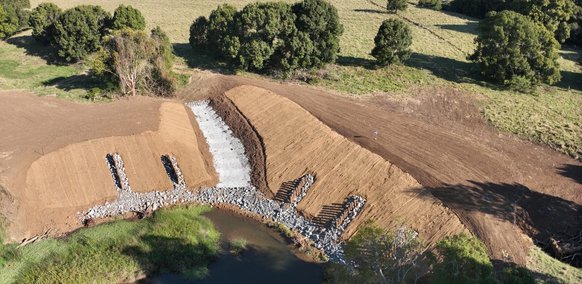
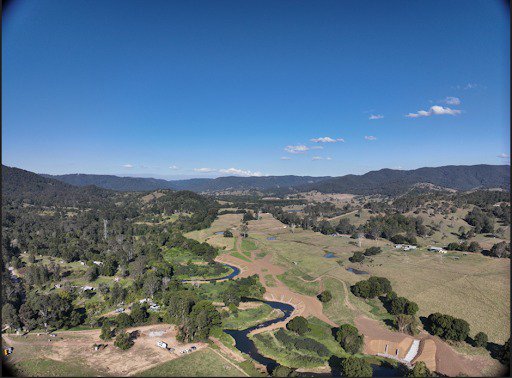
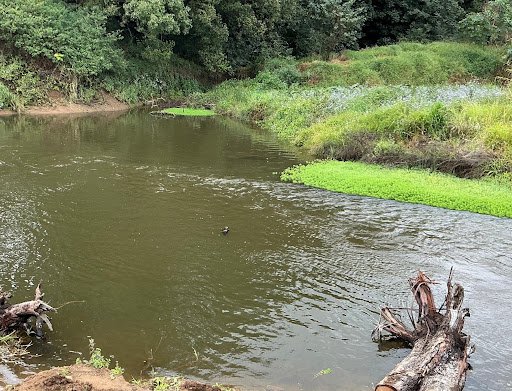
Work on the Obi Obi S2 reach is completed, with the banks reshaped and coir matting, pile fields and rock structures installed. All the civil sites have been planted with a mixed-species cover crop and native tree seedlings. A little more planting and watering remains to support establishment, followed by two years of ongoing maintenance, including infill planting, watering and weed management.
The Obi Obi reach is a particularly special project. The riverbank restoration work funded through the Landscape Repair Program is expected to prevent approximately 1,064 tonnes of fine sediment from reaching the Great Barrier Reef each year. However, this project has grown to represent much more than sediment savings. BMRG, landholders and project partners have come together to support local people, strengthen community connections, and restore important habitat.
This was Indiji Civil’s first riverbank restoration project. As an Indigenous-owned company working closely with BMRG, the team embraced the complexity of the work and delivered it to an exceptionally high standard. Indiji Civil has taken its contribution a step further by developing its People at Risk program. Targeted towards young people who have experienced disadvantages, the program provides meaningful employment and mentoring through real, hands-on work. Indiji’s owners, Ed and Roisin have taken their mentees under their wings, offering not only training and experience in civil construction but also personal support, family guidance and practical life skills such as saving money and learning to drive. The aim is to provide young people with a safe and supportive place to learn and grow, while helping them develop the professional and personal skills they need to thrive well beyond this project. We have been inspired by this crew and are incredibly proud to work alongside them and support the important work they are doing.
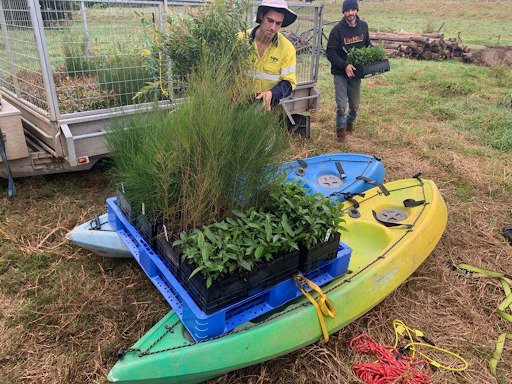
Following the excellent civil works completed by Indiji Civil, Barung Landcare stepped in to seed and revegetate the reconstructed banks. The planting includes local providence trees, shrubs and groundcovers selected to reinforce the soil, suppress weeds and create a diverse and resilient riparian community. Reaching one of the isolated zones required a little extra ingenuity, and the Barung stepped up, built a raft and floated plants, tools and equipment across the creek, demonstrating their initiative and commitment to restoring this site.
The civil works were supported by Kabi Kabi Rangers, who delivered Cultural Heritage Inductions and monitored the removal of topsoil and vegetation. It was particularly meaningful to see an Indigenous-owned civil construction company working alongside the Traditional Owners of this reach. In an exciting upcoming project, we will see 3.8km of this ObiObi reach planted and maintained in collaboration with Kabi Kabi building on the important foundational works completed.
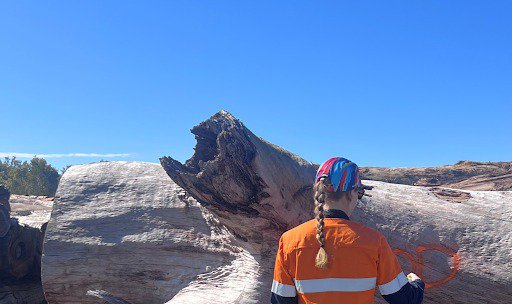
Matching the commitment and passion shown by our contractors, Sunshine Coast Regional Council and the Department of Transport and Main Roads worked with BMRG to give salvaged timber a new purpose. Timber that would otherwise have been mulched, was cut drilled and transported to the Obi Obi site, where it was installed to create habitat for the endangered Mary River Cod.
In a wonderful sign of the habitat this work is helping to protect, a Platypus (Near Threatened species) was spotted and photographed in the creek last week (take a closer look!). It was a timely reminder that, although this project is helping to protect the Great Barrier Reef hundreds of kilometers downstream, its benefits begin right here. By making the most of these opportunities, we can also support the people, wildlife and communities that call these waterways home.
The Landscape Repair Program is funded by the Australian Government's Reef Trust