Environmental science has a quiet rule that often goes unnoticed: data is only as reliable as the way it is collected. A single water sample can provide valuable insight into what is happening within a catchment, but only if it is collected, stored, and analysed using consistent and scientifically robust methods.
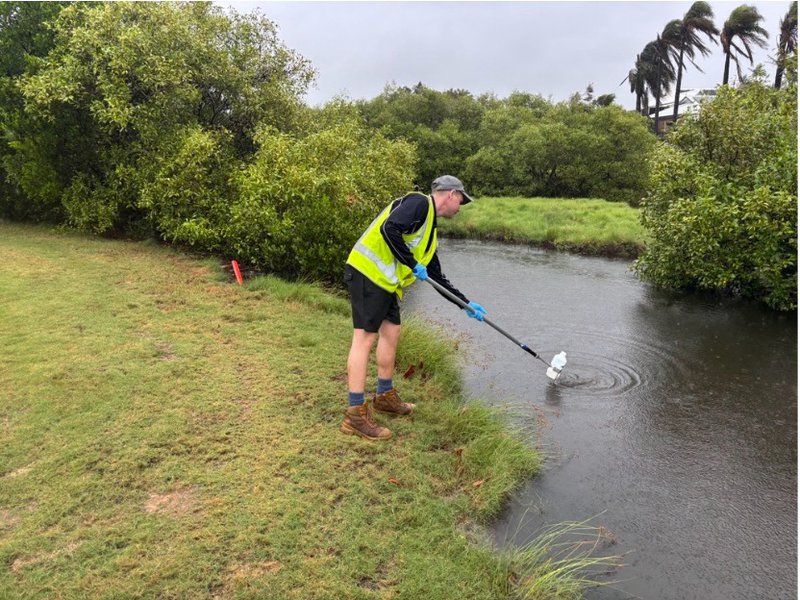
Across the Burnett Mary region, BMRG has been strengthening regional monitoring capability through building staff capacity in water quality monitoring methods aligned with Queensland Government protocols and the broader Paddock to Reef Integrated Monitoring, Modelling and Reporting Program (Paddock to Reef program). The Paddock to Reef program focuses on monitoring and evaluating progress towards land condition and water quality targets and improving the understanding of how land management activities in catchments influence downstream waterways flowing to the Great Barrier Reef. As part of this work, staff have been trained by the Great Barrier Reef Catchment Loads Monitoring team in establishing sampling procedures used by the Queensland Department of the Environment, Tourism, Science and Innovation. This includes identifying representative sampling locations, collecting samples using specialised equipment, maintaining contamination control procedures, and preserving samples under controlled conditions prior to laboratory analysis. Building this local technical expertise also supports the region’s ability to capture environmental change over time, as trained staff are better placed to undertake consistent, high-quality sampling across varying seasonal and catchment conditions.
Consistent monitoring methods are particularly important for water quality parameters such as sediments, nutrients and pesticides, where results can be heavily influenced by sample collection and handling. Using scientifically robust methods helps ensure data is reliable and comparable – both over time and alongside other monitoring datasets – allowing changes in catchment condition to be tracked more effectively.
By continuing to invest in water quality monitoring capability, BMRG is supporting long-term catchment and reef health outcomes through improved environmental data collection. Catchments are dynamic systems influenced by rainfall, land management practices and seasonal conditions, and reliable data underpins the ability to understand how waterways respond to these natural and human influences. This strengthens BMRG's capacity to support evidence-based decision-making and contribute to regional and statewide monitoring efforts over time.
The Paddock to Reef Integrated Monitoring, Modelling and Reporting Program is jointly funded by the Australian and Queensland governments.