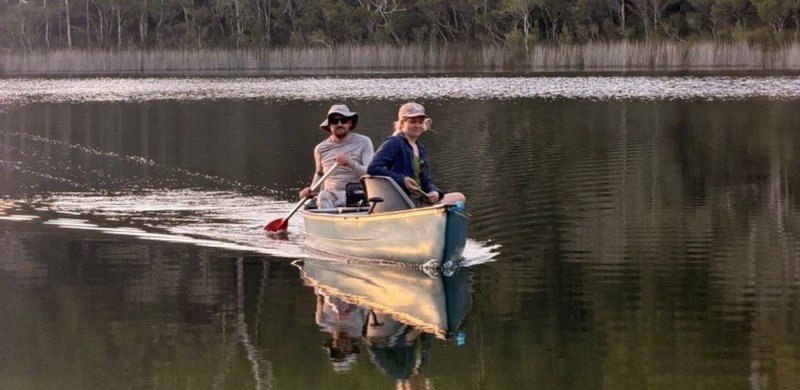
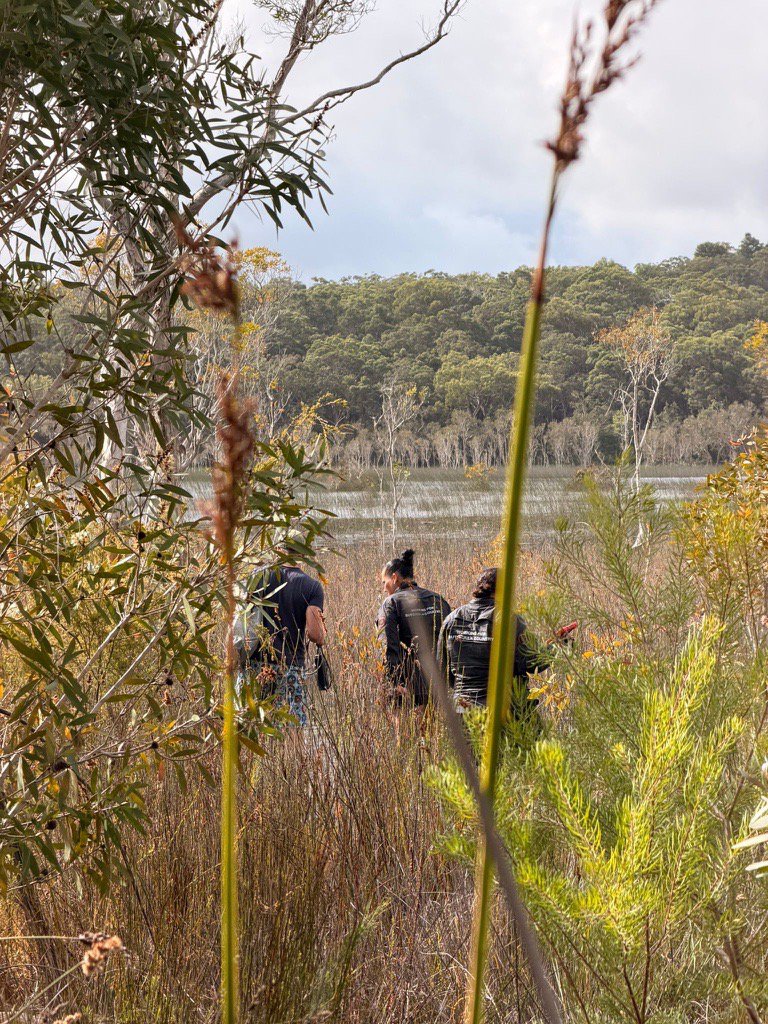
BMRG's Research Team recently joined partners from the Butchulla Aboriginal Corporation (BAC), the Commonwealth Scientific and Industrial Research Organisation (CSIRO) and the Adelaide University for the fourth and final week-long field campaign on K'gari under the current project funding. The field campaign forms part of a broader collaborative effort to better understand and protect the island's unique freshwater systems through coordinated research, knowledge sharing and long-term planning.
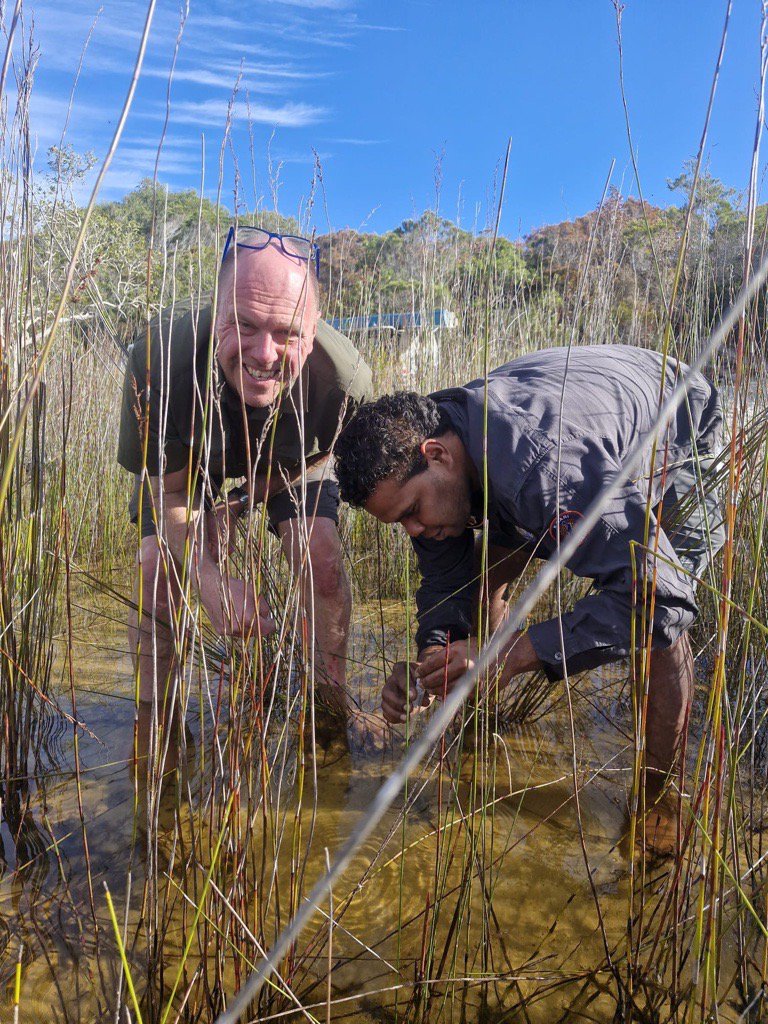
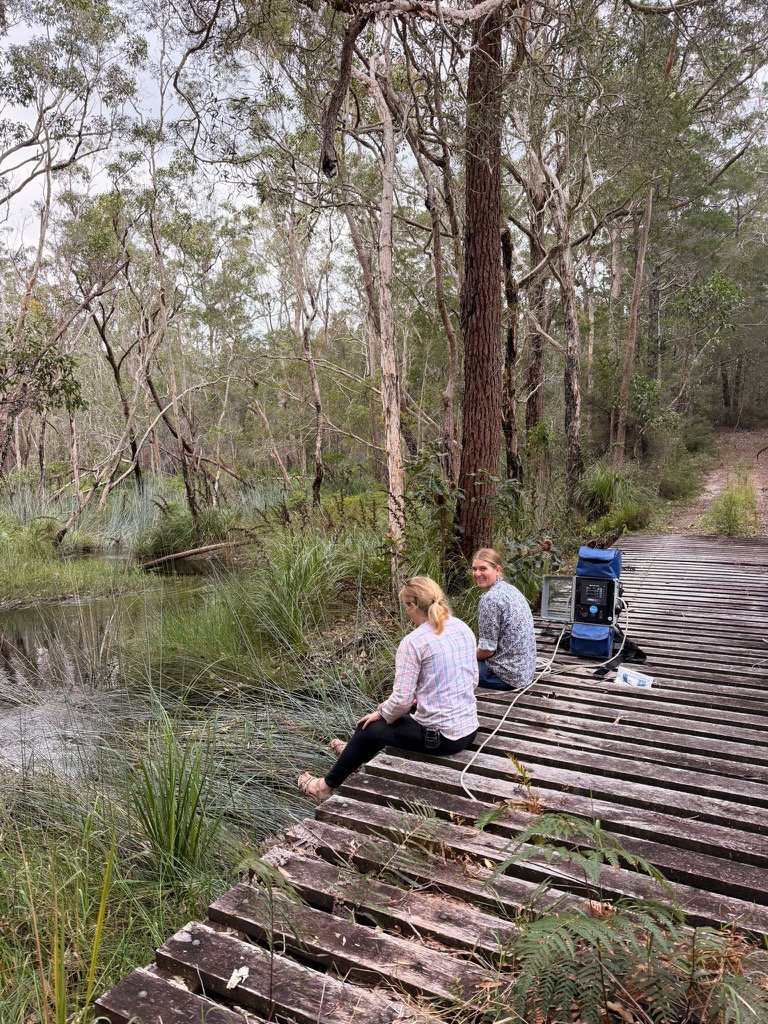
Throughout the week, the team undertook routine water quality monitoring across 12 lakes and creek sites spanning the island, including several culturally significant Men's and Women's sites monitored in partnership with BAC. These surveys provide valuable long-term data to help understand how K'gari's freshwater systems respond to seasonal variation and changing environmental conditions.
The program also expanded creek sampling across the island to collect water for high-resolution geochemical and stable isotope analyses. These data will improve understanding of groundwater movement and the important connections between rainfall, groundwater, lakes and creeks.
Environmental DNA (eDNA) sampling was also undertaken at lakes and selected creek sites. In addition to the routine monitoring locations, several new sites were included based on their geographic importance and cultural significance. Laboratory analysis of these samples will help identify fish, other vertebrates, plants and microorganisms present within the island's freshwater ecosystems, providing another powerful tool for understanding biodiversity and ecosystem health.
Beyond water quality, the team continued a range of hydrological investigations designed to improve understanding of K'gari's freshwater resources. Bathymetric surveys were completed on selected lakes to develop detailed underwater surface models that allow researchers to estimate lake volumes under different water level scenarios. These data are critical for understanding how lakes may respond to drought and future climate change.
Sediment cores were also collected from selected lakes to investigate how K'gari's freshwater ecosystems have changed over thousands of years. By examining layers of sediments deposited over time, researchers can reconstruct past environmental conditions and better understand how these globally significant lakes have responded to previous periods of climatic change, providing valuable insights into their future resilience.
The field team also serviced the network of permanent monitoring infrastructure installed across K'gari, including lake level loggers, groundwater monitoring bores and rainfall/weather stations. These instruments continuously collect hydrological data that are being used to develop lake water balance models and improve understanding of groundwater–surface water connectivity across the island.
By combining Traditional Knowledge with contemporary science, the project is building one of the most comprehensive freshwater monitoring programs ever undertaken on K'gari. The information collected will improve understanding of the island's hydrology, support development of the K'gari Water Management Plan, and provide an important evidence base for future water and fire management.
While the project has now completed its planned field program, consortium partners are continuing to seek additional funding to build on the extensive datasets collected to date and support the long-term monitoring of K'gari's unique freshwater environments. A workshop will be held in July to share progress and findings from the research, identify priorities for future collaborative projects, and explore opportunities for ongoing investment. Together, these efforts will support the consortium's vision of establishing a long-term monitoring program that underpins informed water management and the protection of K'gari's unique freshwater ecosystems and cultural values.